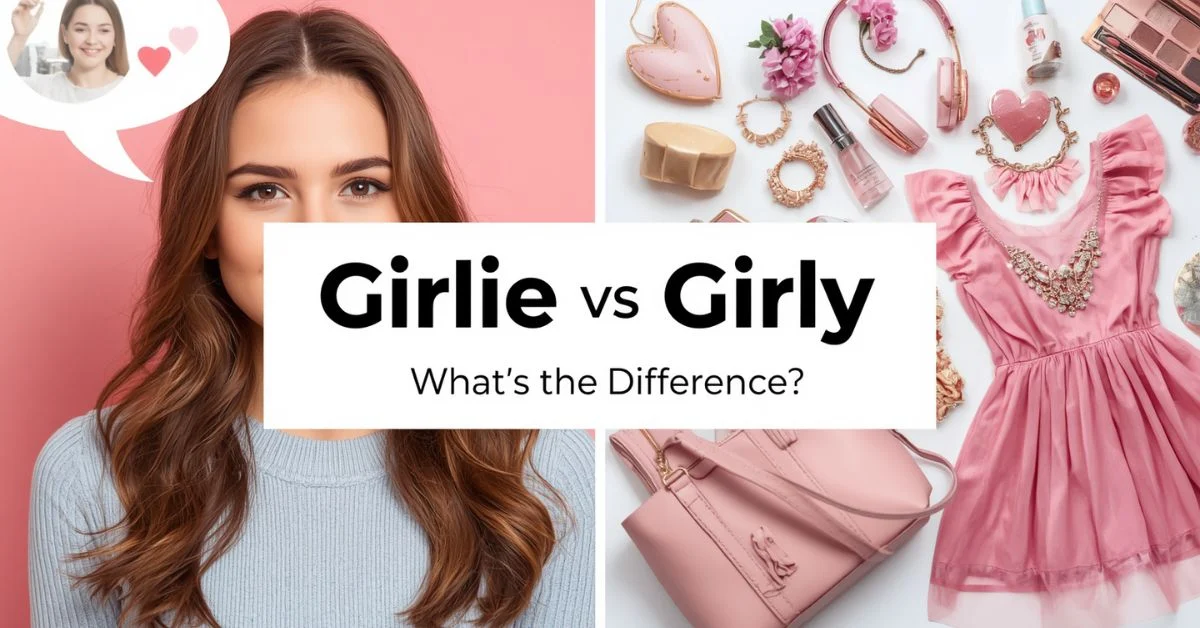
Many English speakers and writers get confused about girlie or girly because the two words look similar and are often used in related contexts. While both terms connect to femininity, feminine style, and girl culture, they are not always interchangeable.
Understanding the difference can improve your writing, communication, and vocabulary accuracy. It also helps content creators, bloggers, marketers, and students use the right word for the right audience.
As language evolves through social media, internet culture, beauty trends, and modern fashion aesthetics, these terms continue to appear in everyday conversations.
This guide explains the meanings, origins, grammar, usage rules, examples, and cultural context behind girlie and girly so you can use them confidently.
Quick Answer
The short answer is simple:
Girly is the more common and widely accepted adjective used to describe something feminine.
Girlie is usually a noun, nickname, affectionate term, or informal variation that refers to a girl or woman in a playful way.
Quick Comparison Table
| Feature | Girly | Girlie |
|---|---|---|
| Most common usage | Adjective | Noun or informal nickname |
| Meaning | Feminine in style or behavior | Informal term for a girl or woman |
| Modern popularity | Very high | Moderate |
| Common in fashion writing | Yes | Rare |
| Common in casual speech | Yes | Yes |
| Grammar role | Adjective | Usually noun |
Examples
✅ She loves wearing floral dresses and pink accessories because her style is very girly.
✅ Hey girlie, how was your weekend?
✅ The room has a soft and girly aesthetic.
✅ Thanks for the advice, girlie.
In most writing situations, especially blogs, articles, product descriptions, and online reviews, girly is usually the correct choice.
Origins and History
The word girl has existed in English for centuries. Over time, speakers created additional forms to express related meanings, emotions, and social identities.
Girly developed as an adjective describing characteristics associated with girls. Historically, it referred to feminine interests, feminine clothing, beauty culture, and traditional femininity.
As fashion culture and lifestyle blogging expanded, the word became strongly associated with feminine aesthetics, makeup, jewelry, dresses, skincare, and personal style.
Girlie emerged as a more affectionate and informal variation. It often appeared in casual speech, friendly conversations, magazines, and popular culture.
During the twentieth century, both terms gained visibility through advertising, women’s fashion publications, and entertainment media.
The rise of social media, influencer marketing, beauty routines, and aesthetic lifestyles has helped both words remain relevant today.
Modern internet culture has also introduced phrases such as:
- Girly girl
- Hot girl aesthetic
- Soft girl aesthetic
- Coquette aesthetic
- Hyperfeminine fashion
These developments have strengthened the connection between the words and modern feminine self-expression.
Word Formation and Meaning Breakdown
Understanding the structure of these words helps explain their differences.
What Does Girly Mean?
The word girly combines:
- Girl
- The suffix “-y”
The suffix “-y” transforms a noun into an adjective.
Examples:
| Noun | Adjective |
|---|---|
| Cloud | Cloudy |
| Wind | Windy |
| Girl | Girly |
Therefore, girly literally means:
Having qualities associated with girls or femininity.
What Does Girlie Mean?
The word girlie is an alternative spelling variation formed from “girl.”
Unlike girly, it usually functions as a noun.
Examples:
- Thanks, girlie.
- You got this, girlie.
- Come here, girlie.
In many situations, it works similarly to terms like:
- Bestie
- Sweetie
- Hun
- Sis
Semantic Difference
Girly focuses on characteristics.
Girlie focuses on a person.
This distinction is the easiest way to remember the difference.
British vs American English
Unlike many English word comparisons, the difference between girlie and girly is not primarily regional.
Both British English and American English recognize the two forms.
However, usage patterns differ slightly.
Regional Usage Table
| Region | Preferred Form |
|---|---|
| United States | Girly |
| United Kingdom | Girly |
| Canada | Girly |
| Australia | Girly |
| Social Media Worldwide | Girly |
| Informal Friend Groups | Girlie |
American English
Americans commonly use:
- Girly clothes
- Girly fashion
- Girly bedroom
- Girly style
British English
British speakers also prefer girly when describing feminine aesthetics and appearance.
Examples:
- A girly handbag
- A girly dress
- A girly colour scheme
Global Usage
Because of influencer culture and fashion trends, girly has become the dominant international form.
Rules and Guidelines for Usage
Knowing when to use each word prevents grammar mistakes and awkward phrasing.
Use Girly When Describing Things
Use girly as an adjective.
Examples:
- A girly outfit
- A girly room
- A girly personality
- A girly aesthetic
- A girly lifestyle
Use Girlie When Addressing Someone
Use girlie as an informal noun.
Examples:
- Hi girlie.
- Thanks, girlie.
- Good luck, girlie.
US Usage
American writers generally prefer girly in:
- Fashion blogs
- Product descriptions
- Lifestyle content
- Beauty reviews
- Marketing materials
UK Usage
British writers also primarily use girly for descriptive purposes.
International Usage
For SEO content, professional writing, and online publishing, girly is usually the safest and most recognizable option.
Common Mistakes and Misconceptions
Many people misuse these words because they seem interchangeable.
Mistake #1
❌ She has a girlie style.
✅ She has a girly style.
Why?
Style requires an adjective.
Mistake #2
❌ That dress is very girlie.
✅ That dress is very girly.
Why?
The dress is being described.
Mistake #3
❌ Hey girly style is beautiful.
✅ Her girly style is beautiful.
Mistake #4
❌ Thanks girly for helping me.
✅ Thanks, girlie, for helping me.
Mistake #5
Assuming Girly Is Negative
Some people think girly is insulting.
In reality, modern usage is usually neutral or positive.
Many women proudly identify with feminine fashion, beauty products, floral prints, skincare routines, and feminine hobbies.
Everyday Usage Examples
Social Media
Social media platforms have increased the popularity of both terms.
Examples:
- This is such a girly outfit.
- My girly skincare routine.
- Every girlie needs this makeup bag.
- Calling all my girlies.
Examples from influencer culture:
- This pink handbag is perfect for a girly aesthetic.
- Every girlie deserves a self-care day.
Text Messages
Text messages often use girlie as a friendly nickname.
Examples:
- Hey girlie, are you free tonight?
- Good morning, girlie.
Additional examples:
- Thanks for checking on me, girlie.
- You look amazing today, girlie.
Online Reviews
Product reviews typically favor girly.
Examples:
- This perfume has a sweet and girly scent.
- The packaging feels very girly and elegant.
Additional examples:
- Perfect for anyone who loves feminine aesthetics.
- The floral design creates a girly appearance.
Casual Conversation
Everyday conversations include both forms.
Examples:
- Her room has a very girly vibe.
- That’s such a girly handbag.
Additional examples:
- Hi girlie, how have you been?
- You should buy it, girlie.
Data, Trends, and Insights
Language trends show a significant difference in popularity.
General Popularity
| Term | Popularity |
|---|---|
| Girly | Very High |
| Girlie | Moderate |
Why Girly Dominates
Several factors contribute to its popularity:
- Fashion blogging
- Beauty culture
- Lifestyle content
- Search engine usage
- Social media hashtags
- Product marketing
Industry Usage
| Industry | Preferred Term |
|---|---|
| Fashion | Girly |
| Beauty | Girly |
| Cosmetics | Girly |
| Lifestyle Blogging | Girly |
| Casual Chat | Girlie |
| Friend Groups | Girlie |
Search Behavior Insights
Users commonly search for:
- Girly aesthetic
- Girly outfits
- Girly room ideas
- Girly hairstyles
- Girly fashion trends
Meanwhile, searches for girlie are often conversational:
- Hey girlie meaning
- Girlie definition
- Girlie slang meaning
This demonstrates the difference between descriptive and personal usage.
Cultural and Linguistic Context
Language reflects cultural changes, and these words have evolved alongside modern identity and self-expression.
Femininity in Modern Culture
Historically, feminine interests were sometimes dismissed or stereotyped.
Today, many people openly celebrate:
- Makeup
- Jewelry
- Dresses
- Skincare
- Beauty routines
- Feminine fashion
As a result, girly often carries a more empowering meaning.
Internet Culture
Internet culture has reshaped how these words are used.
Popular phrases include:
- Girl math
- Girl dinner
- Clean girl aesthetic
- Soft girl aesthetic
- Girly pop
These expressions have expanded the role of girly in online communication.
Gen Z Communication Trends
Gen Z frequently uses girlie as a friendly social label.
Examples:
- Listen, girlie.
- Be serious, girlie.
- You got this, girlie.
The tone is often playful, supportive, and informal.
Modern Writing Behavior
Content creators increasingly use girly because it performs well in:
- Fashion articles
- Beauty blogs
- Lifestyle websites
- Pinterest content
- Instagram captions
- E-commerce descriptions
Its widespread recognition makes it valuable for SEO and communication.
FAQs
Is girlie a real word?
Yes. Girlie is a recognized informal English word often used as a friendly nickname or casual term for a girl or woman.
What does girly mean?
Girly means having qualities traditionally associated with femininity, such as feminine style, appearance, interests, or behavior.
Are girlie and girly interchangeable?
Not always. Girly usually functions as an adjective, while girlie commonly functions as a noun or term of address.
Which word is more common?
Girly is significantly more common in modern English, especially in fashion, beauty, lifestyle, and marketing content.
Should I use girlie or girly in professional writing?
In most professional and SEO-focused writing, girly is the preferred choice because it is more widely recognized and grammatically appropriate.
Conclusion
The difference between girlie and girly comes down to grammar, context, and audience. Girly is primarily an adjective used to describe feminine styles, behaviors, aesthetics, fashion choices, and personality traits.
Girlie, on the other hand, is usually an informal noun or affectionate term used when addressing someone casually.
While both words remain common in modern English, girly dominates professional writing, SEO content, fashion blogs, beauty reviews, and lifestyle publications. Understanding this distinction helps improve clarity, grammar, and communication.
If you are describing something feminine, choose girly. If you are speaking directly to a friend in a casual, playful way, girlie is often the better option.

Hi, I am Constance Hale, an author featured on Grammerdesk.com. I focus on language, writing style, and grammar, helping readers improve clarity, expression, and effective communication in English.