The confusion between whisky or whiskey is very common in English writing and search queries. Many people wonder why the same drink has two different spellings and whether they mean different products.
This keyword is often searched by students, writers, travelers, and alcohol enthusiasts who want to avoid grammar mistakes and understand cultural differences.
The main confusion comes from regional spelling rules used in Scotland, Ireland, the United States, and other English-speaking countries.
Some people even think whisky and whiskey are two different drinks, but that is not true. This article clearly explains the meaning, history, spelling differences, usage rules, and correct examples.
It also helps you choose the right spelling for professional writing, SEO content, and everyday communication without errors or confusion.
Quick Answer
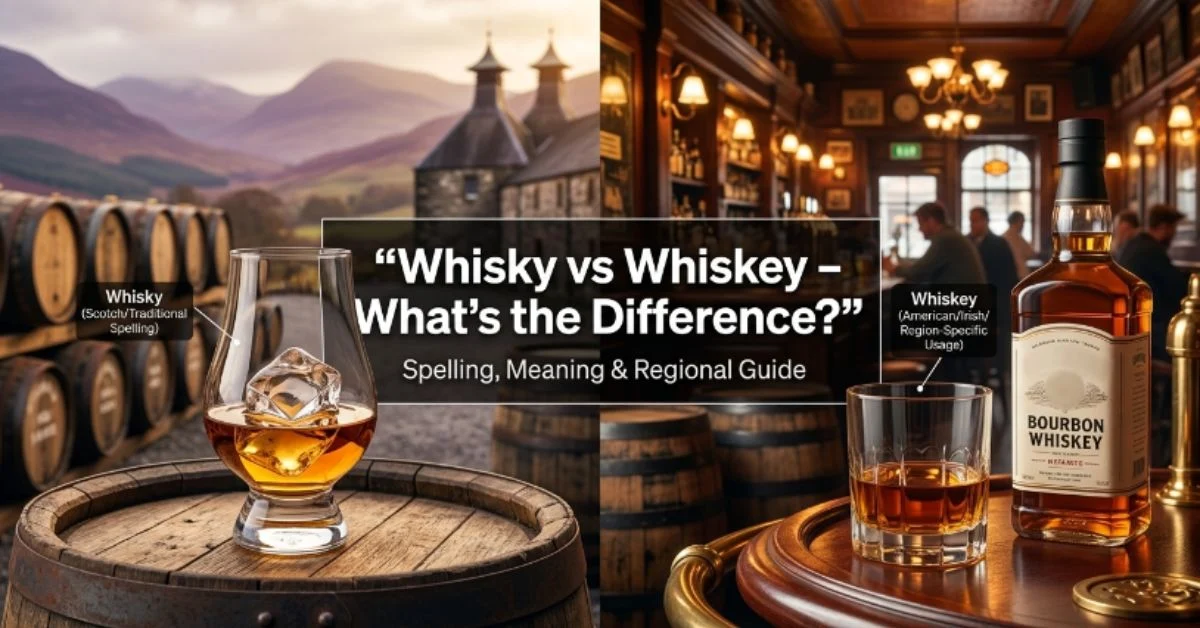
Whisky and whiskey mean the same alcoholic drink, but spelling depends on region.
- Whisky → Scotland, Japan, Canada
- Whiskey → Ireland, United States
Simple Examples
- Scotch whisky is made in Scotland
- Irish whiskey is smooth and light
- Jack Daniel’s is American whiskey
Comparison Table
| Region | Spelling | Example |
|---|---|---|
| Scotland | Whisky | Glenfiddich whisky |
| Ireland | Whiskey | Jameson whiskey |
| USA | Whiskey | Bourbon whiskey |
| Japan | Whisky | Suntory whisky |
The Origin of Whisky vs Whiskey
The word comes from the Gaelic phrase “uisce beatha”, meaning water of life. Over time, this term changed into “usquebaugh” and later became “whisky.”
Scotland kept the shorter spelling whisky, while Ireland added an “e” to form whiskey to create a national identity for its drink. When Irish immigrants moved to America, they brought the “whiskey” spelling with them, which is why the United States also uses it today.
So, the difference is not about the drink—it is about history, culture, and language evolution.
British English vs American English Spelling
The spelling difference is mainly based on regional English usage.
Key Rule:
- British English → mostly whisky
- American English → whiskey
Table Comparison
| Feature | Whisky | Whiskey |
|---|---|---|
| UK Usage | Yes | Rare |
| US Usage | Rare | Yes |
| Ireland | No | Yes |
| Meaning | Same drink | Same drink |
Even though British English prefers “whisky,” Ireland remains the main exception in the UK region due to historical reasons.
Which Spelling Should You Use?
Your choice depends on your audience:
Use “Whisky” if:
- Writing about Scotland
- Talking about Japanese whisky
- Targeting UK or global SEO content
Use “Whiskey” if:
- Writing about American bourbon or rye
- Targeting US audience
- Referring to Irish whiskey
Global Writing Tip:
For SEO articles, always match spelling with brand origin to maintain accuracy and trust.
Common Mistakes with Whisky vs Whiskey
Mistake 1:
❌ Whisky and whiskey are different drinks
✔ They are the same type of spirit
Mistake 2:
❌ All countries use the same spelling
✔ Different regions use different spellings
Mistake 3:
❌ Whisky is stronger than whiskey
✔ Strength is usually the same (40–50% alcohol)
Mistake 4:
❌ Bourbon is not whiskey
✔ Bourbon is a type of American whiskey
Whisky vs Whiskey in Everyday Examples
Emails
- “We are offering premium Scotch whisky for corporate gifts.”
- “Please find details of our American whiskey collection.”
Social Media
- “Friday night = whisky time 🥃”
- “Jameson whiskey hits different!”
News Writing
- “Japanese whisky exports are increasing globally.”
- “US whiskey market shows strong growth.”
Formal Writing
- “The report analyzes global whiskey production trends.”
- “Scotch whisky remains a premium export product.”
Whisky vs Whiskey – Google Trends & Usage Data
Search behavior shows clear regional patterns:
- Whisky → High searches in UK, Japan, Canada
- Whiskey → High searches in USA and Ireland
- Global users search both terms equally due to confusion
Market Insight:
- Whiskey industry is part of the global distilled spirits market
- Scotch whisky dominates premium exports
- Bourbon whiskey leads US consumption
- Japanese whisky is growing rapidly in popularity
Trend Summary:
Search interest increases during:
- Holidays
- Festivals
- Gift seasons
- Cocktail trends
Comparison Table: Whisky vs Whiskey Variations
| Type | Region | Spelling | Example |
|---|---|---|---|
| Scotch | Scotland | Whisky | Macallan whisky |
| Irish | Ireland | Whiskey | Jameson whiskey |
| Bourbon | USA | Whiskey | Jim Beam whiskey |
| Rye | USA/Canada | Whiskey/Whisky | Rye whiskey |
| Japanese | Japan | Whisky | Nikka whisky |
FAQs
1. What is the main difference between whisky and whiskey?
Only spelling and region differ. The drink is the same.
2. Why does Ireland use whiskey instead of whisky?
Ireland added “e” for historical and branding reasons.
3. Is bourbon whiskey or whisky?
Bourbon is American whiskey made mostly from corn.
4. Which spelling is correct?
Both are correct depending on country and brand origin.
5. Is Scotch whisky or whiskey?
Scotch is always spelled whisky.
6. Does taste change between whisky and whiskey?
No, taste depends on production, not spelling.
7. What is Japanese whisky?
It is whisky inspired by Scottish production methods.
Conclusion
The difference between whisky and whiskey is not about taste or quality but about language, history, and regional identity.
Both words describe the same distilled grain spirit aged in oak barrels, but different countries adopted different spellings over time. Scotland, Japan, and Canada use “whisky,” while Ireland and the United States use “whiskey.”
Understanding this distinction helps improve writing accuracy, SEO performance, and cultural knowledge. Whether you are writing blogs, product descriptions, or academic content, using the correct spelling based on origin builds trust and professionalism.
In modern global communication, knowing when to use whisky or whiskey is essential for clear, correct, and audience-friendly writing.

Hi, I’m Mary Norris, a writer at GrammerDesk.com. I write clear, easy-to-follow articles on English grammar, confusing words, punctuation, spelling, and common writing mistakes to help readers improve their English with confidence.